I’m VERY excited about the global market for ebooks, which is just beginning to explode!
The US, UK and Canada can be considered ‘mature’ ebook markets, but the rest of the world is just beginning the exponential growth that characterized these early adopters. Germany is currently the 3rd largest ebook sales market, so it is already worth trying to break into.
In the intro I update you on my own writing progress, and my project for NaNoWriMo, Delirium, which you can see a little about on my Pinterest boards. I also have a print giveaway for ‘One Day In Budapest’ on Goodreads – click here to enter before Nov 14th.
The podcast is sponsored by Kobo Writing Life, which helps authors self-publish and reach readers in global markets through the Kobo eco-system. Today I explain why I think authors should be using Kobo to reach readers they wouldn’t otherwise.
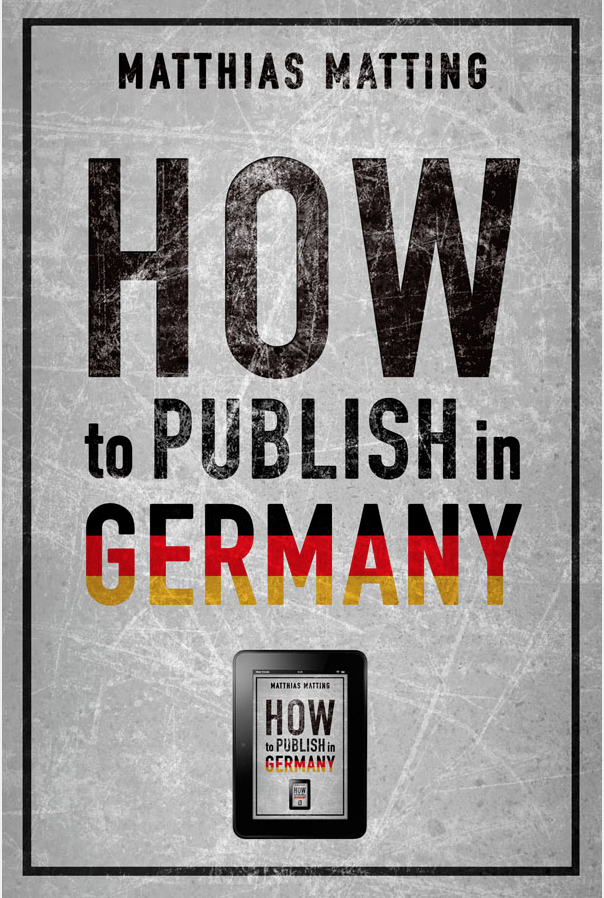
Matthias Matting is a journalist and author of more than 30 books in 6 languages that have sold over 100,000 copies. He runs selfpublisherbibel.de, the #1 site for self-publishing in Germany and he’s just published the English version of his ebook ‘How to publish in Germany‘, available now.
We discuss:
- How Matthias got started with self-publishing, experimenting with different books on the Kindle and other devices.
- Why the German market is worth pursuing. There’s a population of 80 million (bigger than the UK) but the book sales volume is 40% of the USA (with a population of 300m). There are also German speakers in Austria, Switzerland and of course, the rest of the world. Ebook adoption is increasing and Germany is the 3rd largest ebook market after US and UK right now.
- Books that sell well are similar to the US – romance, fantasy, thrillers & crime. 50% of the top 100 bestsellers are self-published.
- Some books in English sell well, but generally you want to publish in German. You can look at translation opportunities at Proz.com or TranslatorsCafe.com. Translators will apply for projects and you can see their experience. You should ask for a test chapter and find a native speaker to read it in order to check quality. Pricing varies by the word, but a 70,000 word book would be between US$3000-$5000. Joint venture partnerships are starting to happen [as I am doing with my translator].
- In terms of ebook readers, Amazon and Kindle have 60% of the market. The Tolino has ~30% and was started by German publishers. It is also sold in physical bookstores so will always have a good % of the market.
- To publish on the Tolino, you have to use an aggregator as right now they don’t have a direct publishing platform. You can use Xinxii.com or ePubli.co.uk (currently exclusive).
- On pricing. The German fixed book price law which means all prices have to be the same on all platforms. Using free and 99c for promotion with 2.99 EUR being the most common price for indies.
- Matthias mentions using Apple iBooksAuthor for his physics book, The new biography of the Universe. But in general, the iBookstore doesn’t have great penetration. He also recommends Createspace.com for print-on-demand as the only service that offers competitive pricing in Germany.
- Marketing. When you announce your sales, Matthias recommends using XTME.de which is similar to BookBub in functionality, with free and paid advertising opportunities. KDP Select is still worthwhile for the Kindle Owner’s Lending Library (KOLL) which gives you a higher profile and visibility in the store, although not so much for the free days. There are fewer traditional publishers in the KOLL so it is a good option, and perhaps worth more than being on the Tolino. Book bloggers still favor print books from traditional publishing. You can also use social reading site LovelyBooks which is similar to Goodreads.
You can find out all the detail in Matthias’ book, How to publish in Germany, available in English and German.
You can also find the results of an author survey and more information at his site Selfpublishingbibel.de/English
You can find Matthias on twitter @mmatting
 POWERED BY BLUBRRY